
Willoughby City Directory Collections
Morley Library's city-directory holdings provide the clearest documented shelf for historical Willoughby research. The earlier title is labeled Willoughby, Willowick, Wickliffe, and Eastlake is included beginning with the 1964 edition. That label is important. A name found near a municipal line may be in a regional volume rather than a city-only book. Later volumes are listed simply as Willoughby, while their coverage includes Eastlake, Wickliffe, Willoughby, and Willowick. Record the title page, year, and coverage statement with every transcription.
| Collection | Years held | Where held | Access |
|---|---|---|---|
| Willoughby, Willowick, Wickliffe directories | 1961, 1963, 1964, 1966, 1968, 1970-72, 1974, 1976-81, 1983, 1986-87, 1989-91 | Morley Library | Consult the collection by year |
| Regional Willoughby directory | 2000-present, continuing subscription | Morley Library | Inspect the regional coverage label |
| Haines Lake-Geauga Counties Criss-Cross | 1976, 1977, 1981-87, 1989, 1991-present | Morley Library | Address-to-listed-name research |
| Lake County atlases | 1840, 1857, 1874, 1898, 1915 | Morley Library; later three through Lake GIS | Historic owner and lot context |
The Lake County Genealogical Society supports Morley's Genealogy Room, indexes material, and may have volunteers able to check selected holdings for a name or family. Its documented work includes marriage indexing, birth and death transcriptions, naturalization indexing, and cemetery inscriptions. Those sources can support a directory trail, but they do not convert a dated listing into proof of a present household.
The Lake County Genealogical Society supports research at Morley Library.
Its connection to the Genealogy Room makes a librarian or volunteer inquiry a useful access route when a needed book is not available for immediate inspection.
Willoughby Directory Years and Gaps
The holdings list gives selected years, not a promise of uninterrupted publication or continuous library ownership. In the first Willoughby-area series, the documented sequence skips from 1961 to 1963, then carries further gaps among the listed decades. A missing year in the holdings list should be recorded as a gap in the available run, not explained as a war suspension or a vanished family. The later regional series begins in 2000 and is described as a continuing subscription. Check the actual cover before assuming an address falls within the volume's place names.
- 1961: the first verified Willoughby-area volume in Morley's listed run.
- 1964: Eastlake begins appearing in the title's documented coverage.
- 1976: the first listed Haines criss-cross year.
- 1991: the Haines run is listed as continuing from this point forward.
- 2000: the regional Willoughby series begins and continues by subscription.
Morley also holds Lake County directories for 1924, 1926, 1928, and 1996-98. They can bridge a county move, but their presence does not make them a Willoughby-specific list. The Painesville series, including its 1923 street-address development, is likewise a comparison source rather than evidence about a Willoughby address. Keep the collection name beside every note so later research does not blur these different books together.
Willoughby Criss-Cross Directory Trail
A criss-cross directory reverses the usual city directory question. Instead of beginning with a name and reading toward an address, start with the street and house number, then note the name printed for that address. Morley's Haines Lake-Geauga holdings are documented for 1976, 1977, 1981-87, 1989, and 1991 onward. The cited list also distinguishes years such as 1982, 1984, 1985, 1988, and 1992-95 as criss-cross only, while 1996-98 combine Lake County and Haines criss-cross material.
This makes the format especially useful for a house-history question, but it remains a historical list. Transcribe the address as printed, open the ordinary directory for the same or nearest available year, and compare the name with a parcel or recorded-deed trail only after preserving the book's date. The regional series and the criss-cross run overlap after 2000, so the cover and publisher information still matter. There is no verified basis for claiming that every resident or every unit appears in either format.
Reading a Willoughby City Directory Entry
Exact page images from a Willoughby volume were not available in the inspected sources. That means an abbreviation, owner mark, spouse notation, or occupation line must never be expanded from memory. Open the title page and the printed abbreviation key in the same volume first. Then make a small inventory of what is actually printed. Some directory conventions may appear only in a particular publisher's edition, so a symbol in one book cannot safely be carried into another.
| Name as printed | Copy initials, spelling, and any name form exactly before normalizing it elsewhere. |
|---|---|
| Spouse notation | Record it only if the volume prints one; it can help separate people with similar names. |
| Address | Transcribe the house number and street exactly, including an older street form. |
| Business or occupation line | Use it only when the entry contains one; do not assume every listing has it. |
| Status mark or section | Copy a mark only with that volume's key, and note whether the entry is in a name or address section. |
The volume's own key is the controlling source for an abbreviation. Photograph or transcribe that key with the entry reference. A precise transcription can then be compared against maps, an obituary lead, or a census household without inserting an unverified meaning into the record.
Willoughby Directory Terms to Keep
Directory language is compact, but the research method should be plain. These terms describe the way a researcher handles the documented collections. They do not claim that every Morley volume contains every feature.
- Criss-cross directory
- An address-ordered book used to move from a street and number to a listed name for the book's year.
- Householder index
- A name-oriented listing used to locate a household entry when a particular volume provides one.
- Abbreviation key
- The printed legend in the same volume that defines its shortened forms and symbols; copy it before interpreting an entry.
- Coverage label
- The place names on a title or cover that state which communities the particular directory includes.
Use a separate line in research notes for the cited volume, page or section, printed address, and every expanded abbreviation. That small habit protects against a common error: mixing an entry from a regional directory with a conclusion about the present City of Willoughby.
Willoughby City Directory Name Changes
A missing listing can be a place-name problem. Before the village adopted the Willoughby name in 1834, local records can use Chagrin or Chagrine, and earlier references may use Abbott's Mill or Chagrin Mills. The area also passed through several county jurisdictions, including Cuyahoga and Geauga before Lake County. Those names are search variants for older clippings, maps, and family material, not separate current municipalities to add to a modern directory result.
Street language needs the same care. The verified examples are Cemetery Street becoming West Spaulding Street in 1923, Fairway Boulevard in North Bay Colony becoming North Bay Drive in 1994, and Honey Crisp Court in Melrose Farms becoming Steve Guard Court in 2007. Search both documented forms when a date falls near a change. Then compare a historic street-and-ward map or a legal description instead of assuming the current address was always printed in the earlier form.
Willoughby Directory Maps and Files
The city directory trail gains context from Morley's Lake County atlases for 1840, 1857, 1874, 1898, and 1915. The 1874, 1898, and 1915 atlases are available online through Lake County GIS according to the library. An atlas owner label can suggest a historical landholding and show a lot or building context. It is not a census of occupants. Pair an atlas note with the date and the legal parcel story rather than trying to force an old map into a modern street-number match.
The Lake County Historical Society research library is an appointment-based companion source. It reports approximately 3,000 surname files or boxes, more than 10,000 digitized photographs viewable on a computer, hundreds of period maps, old telephone directories, and local city and ownership histories. Send a focused topic, surname, address, and time range before visiting so staff and volunteers can perform preliminary work. The closer Willoughby Historical Society is listed at Willoughby Public Library, 30 Public Square, but no verified current catalog, hours, or directory-year run was located.
The Lake County Historical Society library describes its appointment research holdings.
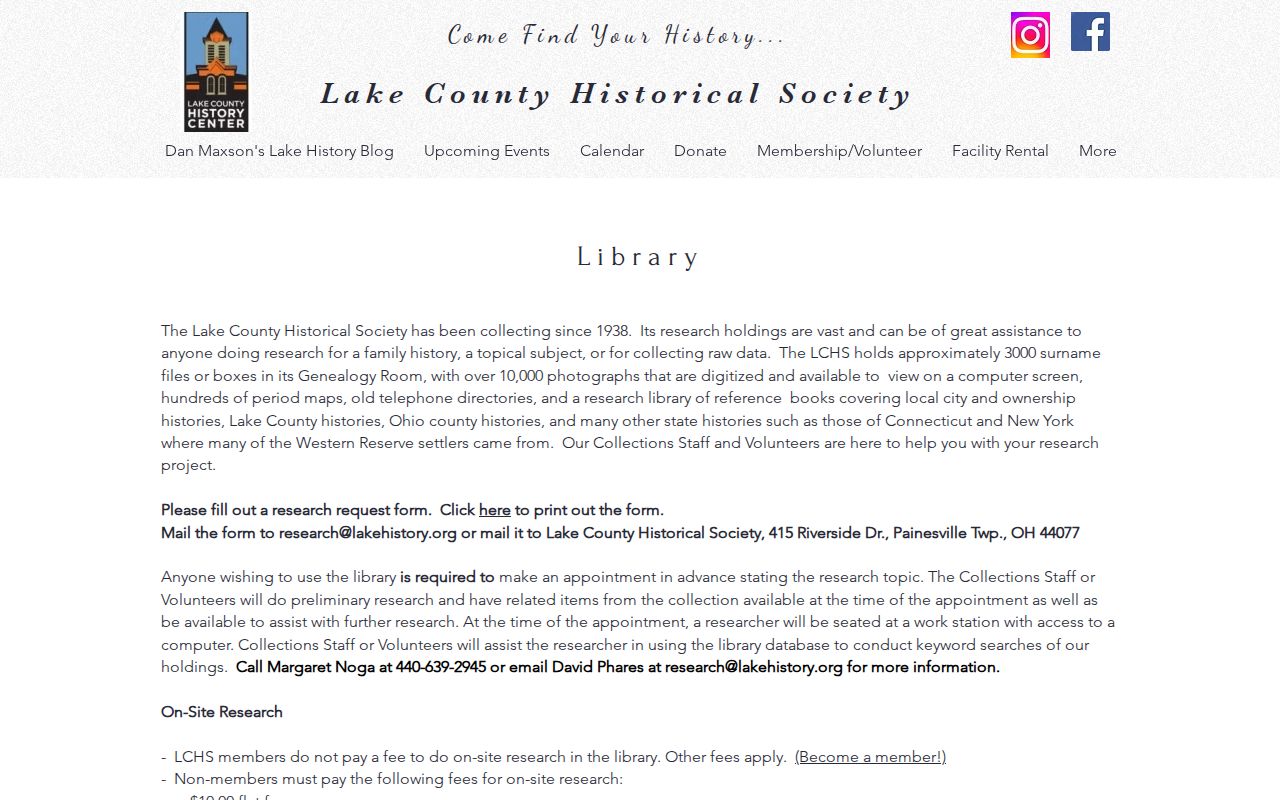
Appointment research can supply maps, photographs, and older telephone directories when the documented Morley run leaves a year gap.
Trace Willoughby City Directory Households
Begin with the most recent Morley volume that confidently matches a person or address. Move backward only through available years and record spelling, initials, spouse notation if printed, address, and any volume-defined clue. If the address changes, open a Haines criss-cross book for that year or the nearest available year to see the name listed at the old and new location. A change may reflect a move, a printing choice, a changed street label, or a listing gap. It should prompt a second source, not a quick conclusion.
- Locate the name or address in a dated Morley volume and copy the coverage label.
- Work backward through the next available directory years, preserving spelling and street changes.
- Use a Haines criss-cross book when available to test the address-first side of the trail.
- Pair the appropriate decade with the federal census, whose public schedules run through 1950 under the 72-year restriction.
- Use Morley's Obituary Index, which reaches 1830-present, and its cited newspaper microfilm to seek a dated family or death lead.
National Archives census research supplies historical household snapshots through 1950. A census is taken once per decade, while a directory is a dated commercial reference. Compare them for name, age, relationship, and address context, but do not assume they use the same modern street form. Morley's newspaper microfilm includes documented runs such as the Lake County Herald, Lake County Republican-Herald, and Fairport Beacon, which can help confirm an event after a directory lead.
National Archives census materials provide the wider household context for a Willoughby city directory trail.
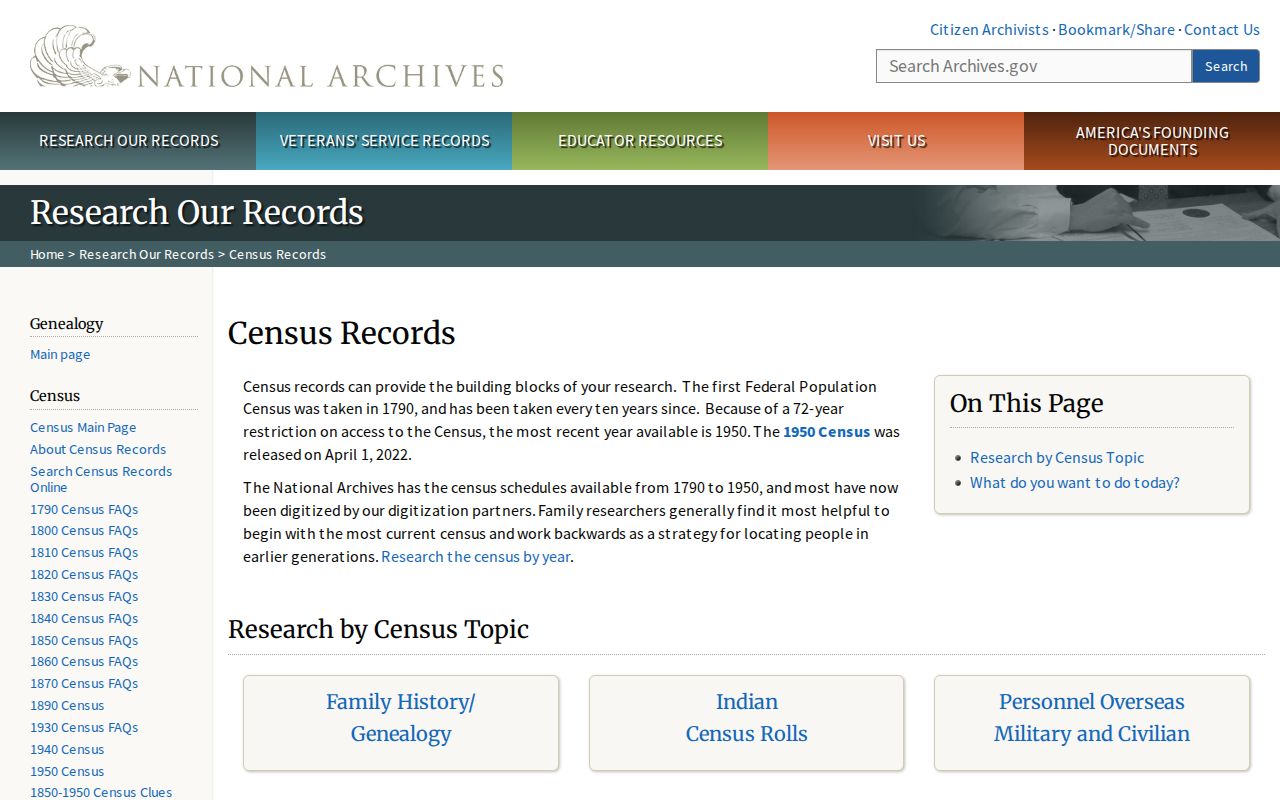
The 1950 census is the most recent public federal household schedule, so it complements rather than replaces a directory from a later year.