
Willoughby Previous Residents by Era
Past residents are found through sources with different time spans and different purposes. A recorded deed identifies ownership roles and a legal description. A criss-cross directory gives a name listed at an address in a stated volume. Atlases offer landowner and lot context. The federal census is a historical household snapshot, not a modern address lookup. Start with the source that fits the time period, then compare at least one other record type before treating an association as established.
| Historical source | Documented era | Access channel | Address-history value |
|---|---|---|---|
| Lake County deeds | County series begins April 16, 1840; online cutoff not verified | Recorder AVA, Laredo Select, counter, or request email | Recorded transfers, party roles, and legal-description references |
| Pre-Lake County records | Before 1840 | Cuyahoga or old Geauga repositories; Morley guidance | Earlier Willoughby-area legal and marriage context |
| Willoughby-area directories | Selected 1961-1991 volumes; continuing regional series from 2000 | Morley Library | Listed name and address within the volume's coverage area |
| Haines criss-cross books | 1976, 1977, selected 1981 onward, continuing subscription | Morley Library | Address-to-listed-name comparison for a dated year |
| Lake County atlases | 1840, 1857, 1874, 1898, and 1915 | Morley; later atlas set also referenced by Lake GIS | Historic owner, lot, and building-context clues |
| Federal census | 1790-1950 public schedules | National Archives and library research tools | Household snapshot subject to address and enumeration-district work |
For a recent transfer question, begin with the current parcel and its purchase instrument. For an older household question, work from the closest dated directory or atlas and test it against the deeds and census. A City Building Department request can add a project-date layer, but its online form menu is not a historical address-results database.
Freeze a Willoughby Resident Address
Before looking for past residents, capture the current street number and spelling, Parcel ID or PIN, legal description, subdivision or lot if shown, and city and ZIP label. The Lake County Auditor's Real Property search accepts address number, street, postal code, owner, and parcel inputs. Its instructions call for capitals and no dashes. Once a live parcel is confirmed, write down the owner label and tax mailing address separately from the situs address.
The legal description is especially important for older Willoughby research. Streets may be renamed, a subdivision may have developed later, and a historical record may not use the modern street address at all. A parcel and legal description keep the inquiry tied to the same land while names and street forms change. The ZIP is useful for normalizing a current address, but it is a mail-routing label rather than a property-boundary description.
| Research-log field | Why preserve it |
|---|---|
| Current street form | Provides the starting address and a comparison point for older variants. |
| Parcel ID or PIN | Connects the Auditor record to Lake Navigator and a title investigation. |
| Legal description | Bridges a lot or subdivision through street changes and recorded instruments. |
| Situs and tax mailing addresses | Prevents treating a mailing contact as proof of physical presence. |
| Source date | Keeps current property context distinct from an older listing or deed. |
Note: A property-tax role, a mailing contact, and a person listed in a dated directory are separate facts, even when the same name appears.
Willoughby Previous Residents Deed Chain
A title chain is the ownership route behind an address history. Start with a verified current parcel, then find the current owner's purchase instrument using the owner's name, date clues, and legal description. Read the instrument itself or a Recorder-confirmed copy before extending the trail. The address can be missing or changed in land records, while the legal description and the named instrument parties give the more durable links.
- Record the current owner label, Parcel ID, legal description, and any transfer clue from the Auditor record.
- Use the Lake County Recorder to locate the current owner's purchase deed, or ask the Recorder to identify a known instrument.
- Copy the grantor, grantee, recording date, document number or book and page, legal description, and prior-reference language from the deed.
- Use the earlier seller as a possible grantee on an earlier purchase, then test the legal description and dates before accepting the match.
- Repeat one instrument at a time and note where the public online route stops. Ask the Recorder about access for the target record rather than inventing an AVA coverage year.
- Grantor
- The person or entity conveying an interest in a recorded instrument.
- Grantee
- The person or entity receiving the recorded interest in that instrument.
- Chain of title
- The sequence of recorded transfers tied to the same property, checked document by document.
- Legal description
- The lot, subdivision, or other recorded land description that is more stable than a street address across time.
The Recorder identifies Deed Volume 1, Page 1, recorded April 16, 1840, as Lake County's first deed. That makes it a firm county-series starting point, not a promise that every earlier Willoughby land record is absent.
Willoughby Previous Residents Recorder Routes
The Recorder offers three meaningfully different access paths. AVA supplies basic information through the public Recorder site. Laredo Select is an advanced search route that requires account registration and a password. The Recorder counter and the public-record request inbox remain available when a needed document, copy, or exact access question is not resolved online. The public landing page does not disclose AVA's full field menu, online start year, image gate, or export rules, so those features should not be assumed.
| Recorder route | Documented distinction |
|---|---|
| AVA | Public basic-information route from the Recorder's landing page. |
| Laredo Select | Advanced route requiring an account registration and password. |
| Counter or email request | Direct path for a known document, missing online result, or public-record request. |
Email RecorderPublicRecordRequest@LakeCountyOhio.gov with the address, parties, period, and instrument clue. The Recorder is at 105 Main Street in Painesville, which is also the useful in-person fallback. The comparison matters because a basic index result can locate a document trail without granting the same access as an advanced account or a custodian request.
Lake County Records Commission materials show the county's retention-governance route, which is different from a deed-content search.
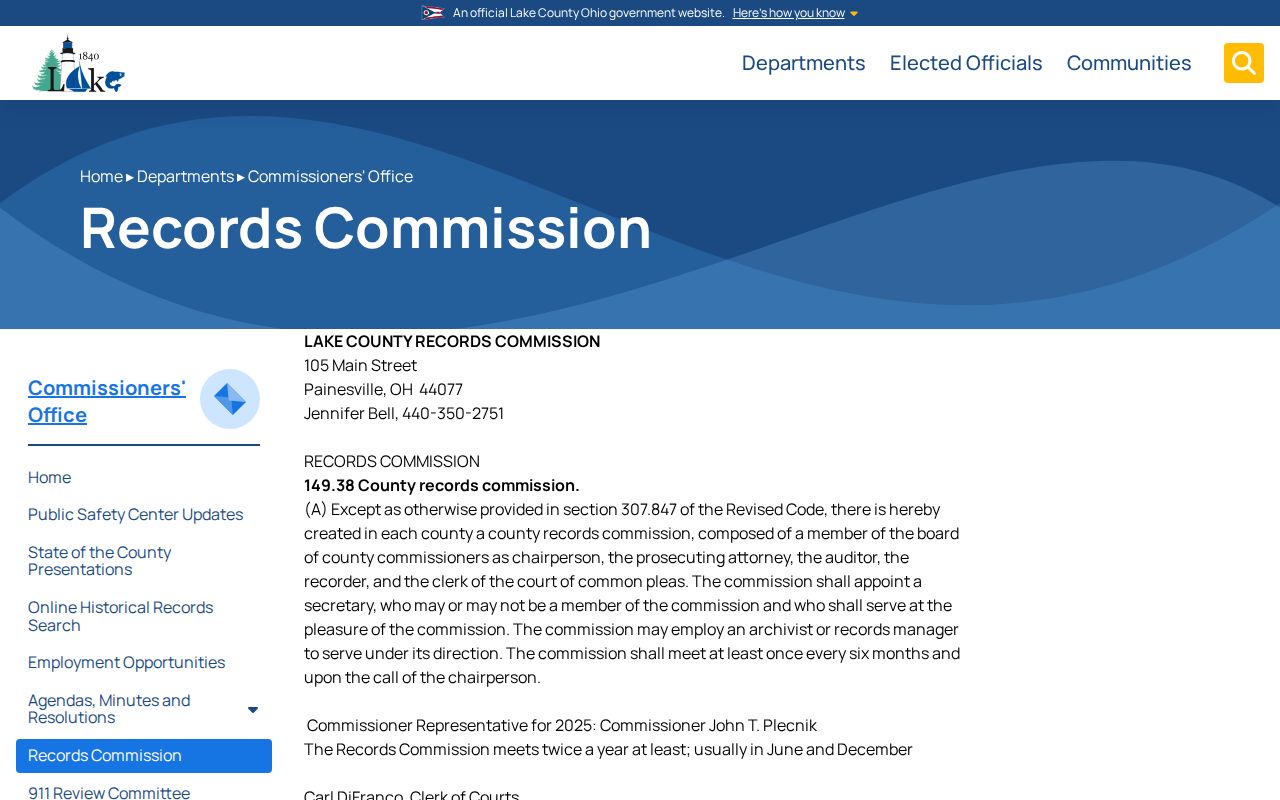
Retention information can help frame a records question, but a specific deed or copy request still belongs with the Recorder as the custodian.
Willoughby Records Before Lake County
Lake County formed on March 6, 1840 from old Geauga County. Earlier Willoughby research can therefore cross county lines. Morley's marriage guidance identifies Cuyahoga as particularly relevant to Willoughby Township before 1840, while old Geauga is the immediate predecessor jurisdiction for Lake County. The broader city history also records changing place names and county associations, including Chagrin and Chagrine before the village adopted Willoughby in 1834.
When the Lake County deed chain reaches its 1840 boundary, preserve the final legal description, party names, and dates, then move to the appropriate predecessor jurisdiction rather than restarting with a modern address search. A missing Lake County record at that point is a jurisdiction question first. Morley Library and historical repositories are better places to ask which earlier county source fits the known period.
Lake County public notices are a reminder that online and office access can change, so retain the written and counter routes for a needed record.
For an older record, the county's current office notices do not establish historical custody, but they reinforce the value of documenting an alternative contact channel.
Willoughby Street Names Can Mislead
Street changes are a documented backward-trail trap. Cemetery Street became West Spaulding Street in 1923. Fairway Boulevard in North Bay Colony became North Bay Drive in 1994. Honey Crisp Court in Melrose Farms became Steve Guard Court in 2007. Search both forms when the time period fits, then use the parcel's legal description, plat or subdivision context, and city street or ward maps to decide whether they refer to the same property.
These are specific name changes, not evidence of an all-city renumbering event. A historical directory may also use Chagrin, Chagrine, township, or older county wording. Copy the old form as printed before normalizing it, because an automatic modern spelling can hide the path to a prior listing.
Note: A former street name is a search key, not proof that every modern address inherited the same history or numbering.
Morley Sources for Past Residents
Morley Library is the documented local shelf for testing who lived here before. Its Willoughby, Willowick, Wickliffe series has selected 1961 through 1991 volumes, with Eastlake included from 1964. From 2000 onward, a continuing regional Willoughby title includes Eastlake, Wickliffe, Willoughby, and Willowick. For an address-first question, Haines & Co. Lake-Geauga Counties criss-cross volumes are listed for 1976, 1977, 1981 through 1987, 1989, and 1991 onward. Read the individual year list because it includes gaps and combined titles.
A criss-cross book reverses a usual directory search: begin with the street and house number, copy the listed name, then open the ordinary directory for that year or the closest available year. It is historical listing evidence. The collection itself is covered on the Willoughby city directory page; the address-history task is to compare one dated listing against deeds and other sources without turning the volume into a present-day roster.
- Choose the nearest directory and criss-cross year supported by Morley's holdings.
- Transcribe the address and name exactly, including initials or spelling variants.
- Check the printed volume's own key before interpreting any notation.
- Move backward or forward through available volumes, logging changes rather than filling gaps with assumptions.
- Pair the resulting interval with the appropriate federal census or land record.
Willoughby Previous Residents Atlas Trail
Morley holds Lake County atlases for 1840, 1857, 1874, 1898, and 1915. The 1874, 1898, and 1915 atlases are also identified as online through Lake County GIS. An atlas can connect a landowner name, lot scale, or building context to a legal-description hypothesis. It is not a household census. Use it after the deed trail or with an address-normalization question, then test the result with a dated directory, probate file, obituary, or federal census.
The National Archives makes federal census schedules from 1790 through 1950 available for research, with 1950 the latest public schedule under the 72-year rule. A census may show a household context, but historic addresses require careful enumeration-district work and should not be presumed to match a modern street number. Morley's Obituary Index, which runs from 1830 onward, and county probate records can supply family-history or estate leads after a person has been placed at an address and time.
Ohio's archival vital-record rule describes transfer periods for older vital records, including 125 years for births and 50 years for several other listed record types.
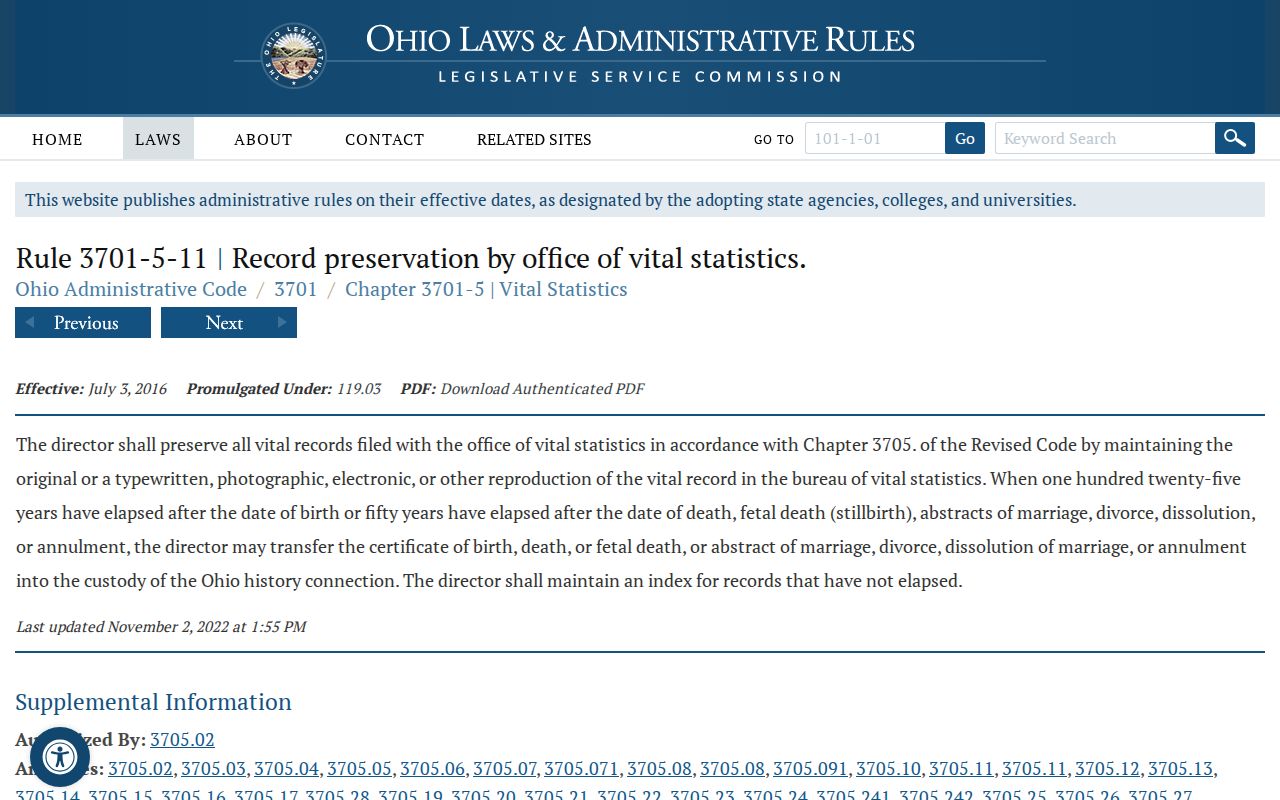
The rule identifies an archival route; it does not promise a certified copy or turn a historical index into proof of a current address.
Willoughby Previous Residents: Household Proof
Previous residents research becomes stronger when the property trail and household trail meet at a date. A recorded owner can be different from a listed occupant. An atlas owner label can be different from a census household. An obituary, probate file, or historical death-index entry can help identify the right family or estate path, but each must be checked with its custodian. Treat names as leads, preserve the source date, and keep a note of what the source actually establishes.
Lawful use. Use Willoughby house-history and family-history records responsibly. Do not use historic or current public material to stalk, harass, track, or harm a living person.